
Booth Installation and Dismantling: What Happens on Build-Up Day
On-site assembly is where weeks of design meet a few hours of hall access. This page walks through the sequence and explains why test assembly, where we do it, makes build-up day faster and calmer.
The install sequence
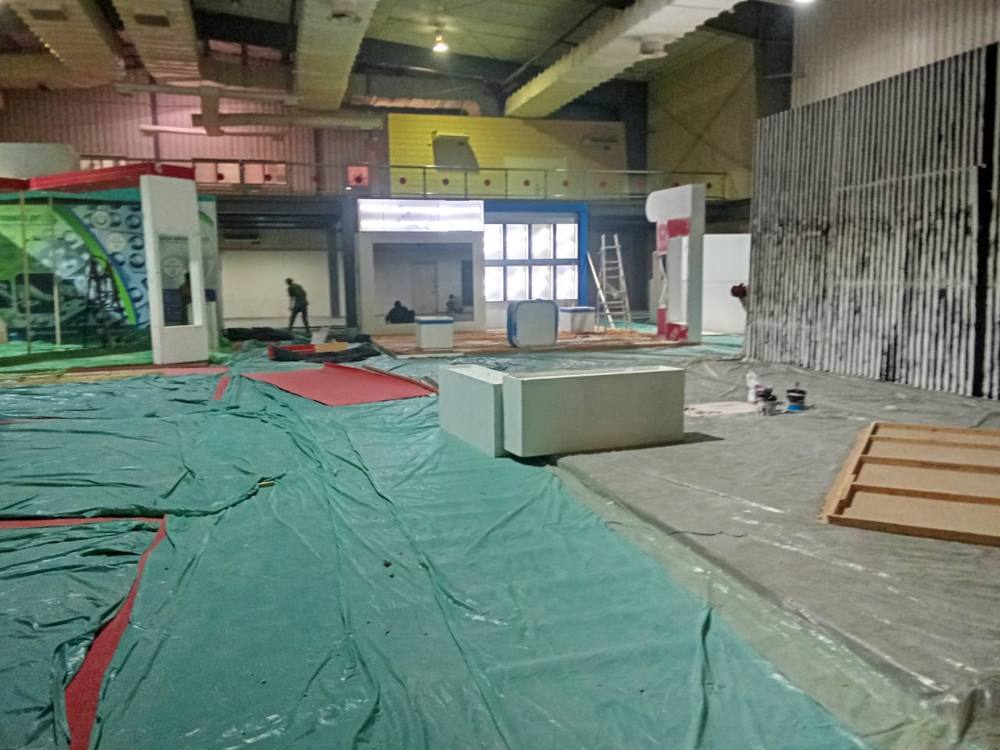
- Floor protection: the hall floor is covered before anything is built.
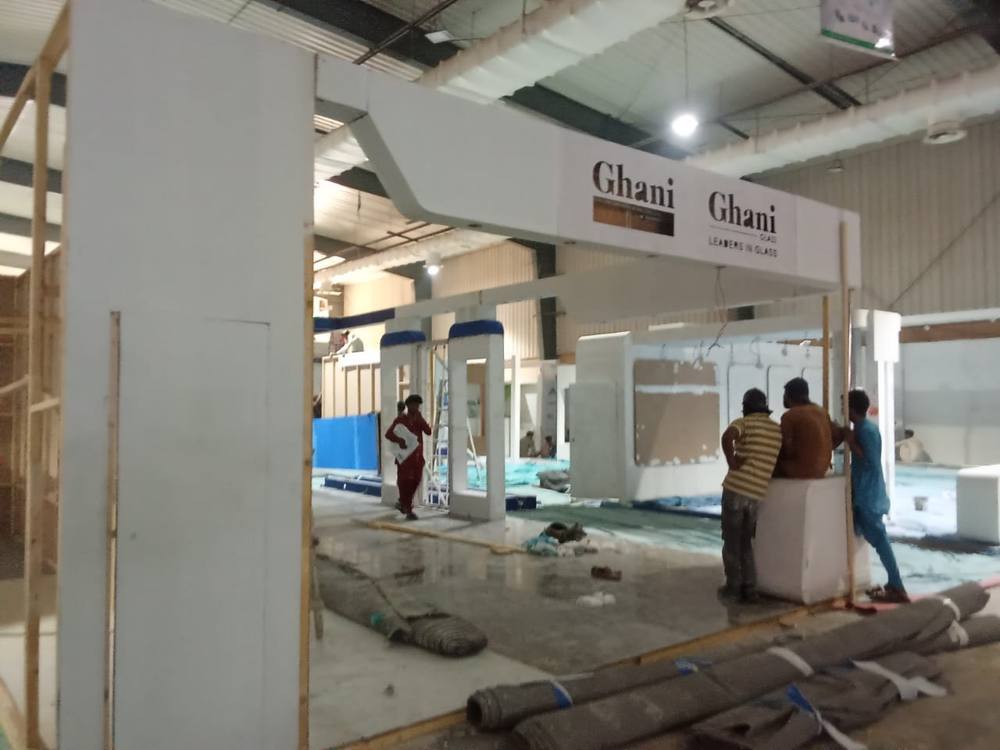
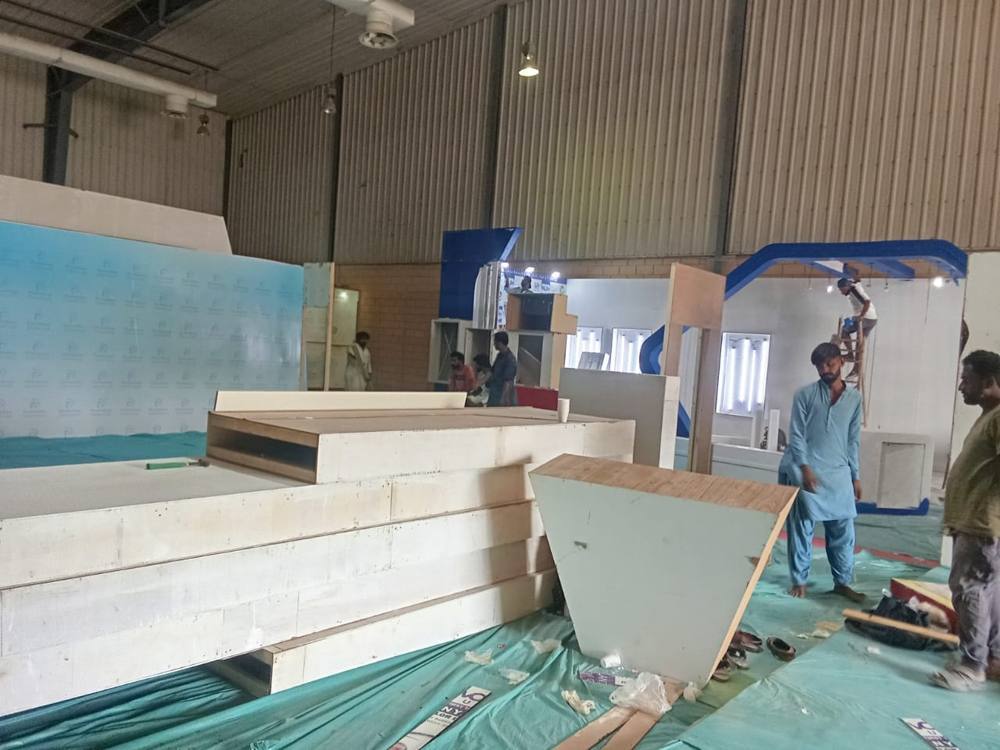
- Structure: frames and main walls go up in their tested order.
- Panels and counters: fitted, levelled and secured.
- Graphics: printed panels, lettering and fascias fitted.
- Lighting and electrics: installed and checked.
- Final walk-through: clean, complete and ready.
Why test assembly saves hours
When a stall is test-assembled in our workshop, which we do where the project calls for it, every part is numbered. On site, the crew rebuilds in the same order, so there is little guessing and few surprises. Problems with fit, finish or dimensions surface in the workshop, where fixing them costs minutes instead of a missed deadline.
Crew size and timing
A typical installation uses a crew of 5 to 10 people and takes about three days, depending on the stall's size and design and the access time the venue gives.
Show-day support
We do not disappear once the doors open. Our team offers show-day support, so a light, a panel or a graphic can be fixed while the exhibition runs.
Dismantling and clear-up
After the event our crew takes the stall down, removes it and leaves your space clear for the venue. Tell us the exit time early so we can plan the crew around it.
Stall setup for exhibition: what our installation service covers
- Floor protection, structure, panels, counters, graphics and lighting, in the tested order
- A final walk-through before the hall opens
- Show-day support if a light, panel or graphic needs fixing
- Dismantling and clear-up after the event
The stall arrives from our own workshop. See expo stall fabrication for how it is built before it ships.
Exhibition booth installation checklist
Before the build-up day, confirm these seven points. Each one removes a common cause of delay:
- Stall number, size and position match the organiser's plan.
- The exhibitor manual rules on height, power and flooring are in the design.
- Power points and loads are requested from the organiser in time.
- Parts are labelled and the graphics are approved and printed.
- Crew entry passes and the build-up window are confirmed.
- Floor protection and tools are packed.
- A final walkthrough is planned before the hall opens.
For the full show timeline, use our printable exhibition booth checklist.
Fire and electrical safety checks before build-up
Safety rules come from the venue and the organiser, so read the exhibitor manual first. Confirm these points before the build-up day:
- Which materials and finishes the venue allows.
- Where aisles and emergency exits must stay clear.
- How much power your stall may draw, and where the points are.
- Who may carry out electrical work in the hall.
Plan power early. In our island stall design case study, the exhibitor's equipment drew 17.7 kW at 400 V three-phase. The concept therefore asks the organiser for at least 32 A three-phase power. Every electrical plan must be checked by a qualified electrician before construction.
This is general guidance. The organiser's manual always has the final say.
What helps us most
- Venue name, city and your allotted build-up time
- Stall number and position
- Any venue access or delivery rules
- A contact person on site
Design sign-off is needed at least one week before the event.
From our builds
Common questions
Who installs the stall?
Our own crews. The people who build your stall also install it.
Which cities do you install in?
Karachi, Islamabad and Lahore, through our local teams.
Do you remove the stall afterwards?
Yes. We dismantle and clear the stall after the event.
When is the final payment due?
40% is due on installation and complete setup, after 60% upfront.
How long does installation take?
Typically about three days, depending on the stall's size and design and the access time the venue gives.
How big is the install crew?
A typical installation uses a crew of 5 to 10 people.
Do you offer show-day support?
Yes. Our team offers support on show days.
What does your stall installation service include?
Our own crew installs the stall on site, offers show-day support and dismantles it afterwards. Installation typically takes about three days with a crew of 5 to 10 people.
Related reading
- exhibition stall fabrication in Pakistan: see how a stall is built, from frame to finish.
- exhibition booth tick-box checklist: seven stages from booking to follow-up.
- how to plan an exhibition stall in ten steps: from goal to follow-up, in order.
- which graphic suits your stall: backlit, fabric, vinyl and floor graphics.
- Expo Centre Karachi exhibitor guide: venue facts, the exhibitor manual and large-hall design.
- how much an exhibition stall costs in Pakistan: starting prices for every stall type and what moves them.
- stall, booth and stand explained: plain-language definitions and types.